
 English
 Ian D'Agata
There are fewer names more iconic in Italian wine than that of Biondi-Santi, a winery associated not just with a number of wines from specific vintages of now near mythical status, but also many other significant “wine firsts”.
A handful of local farmers had begun making a red wine from the local Brunello grapevine already by the mid-1800s (the first label carrying that word dates back to that moment in time). The grape variety was, and is, called so because of the brownish hue of its berries: bruno in Italian means brown. The wine’s hue might certainly have been thought of as being of a brownish colouration too, but that is not where the grape’s and wine’s name was derived from, as has been stated elsewhere. I have been walking Brunello’s vineyards for close to forty years now and I can guarantee you, independently of what some might say today, that everyone I spoke with always recalled, already decades ago, that it was the grape’s colour that brownish as it is gave the name to both grape and wine (it was always a habit to do so in Italy, and in fact, there are numerous Italian wiens named after the graep they are made with).
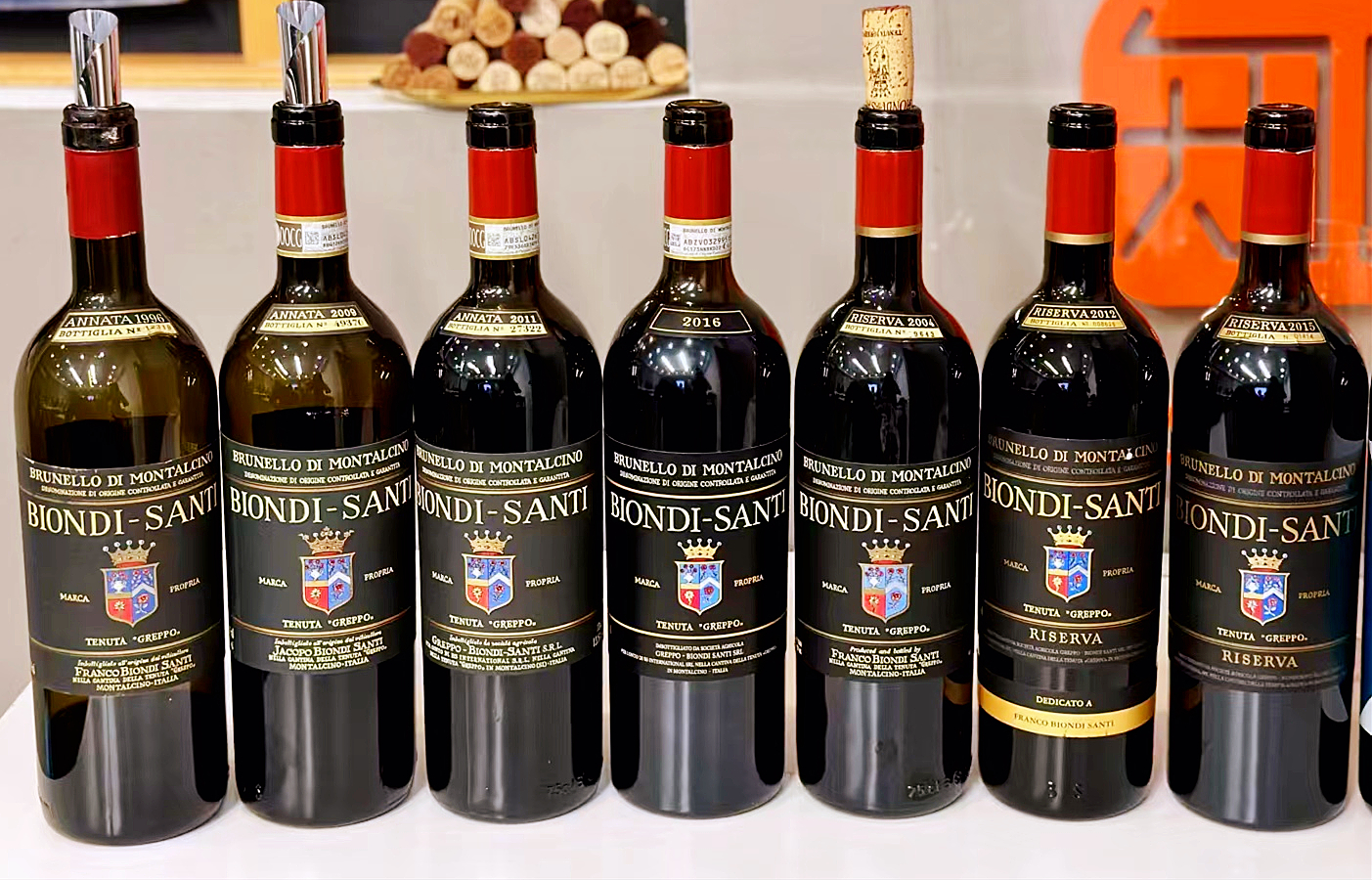
In order to continue reading the present article, which also features one of the most lengthy and detailed growing season weather descriptions of each vintage written anywhere, as well as tasting notes and scores, please note that
It was the Biondi-Santi family members that first recognized the uniqueness and superlative quality of this specific grape, something for which it deserves ever-lasting credit. After all, the winery is universally recognized as being the “first” to produce what is generally believed to be the first true Brunello wine ever made. “Brunello” wine in the sense of a wine made with only the Sangiovese grape, and aged in large oak barrels, and that could age (also salient characteristics of the modern-day Brunello wine). That’s some trifecta, and one that characterizes wholly Brunello’s wine. Such a wine was the brainchild of Clemente Santi, a pharmacist by training and a well-respected scientific author, who wished to make a wine that could age. He first presented two bottles of a wine labelled as “Pure red wine of 1852” (“vino rosso puro 1852“) at the Industrial and Natural Products fair of Tuscany (the “Esposizione dei prodotti naturali e industriali della Toscana”). But his first wine carrying explicitly a reference to “Brunello” was of the 1865 vintage [“vino rosso scelto (Brunello) del 1865”], and shown at the 1867 Paris Exposition, and again at the Montepulciano Fair in 1869 where he won two silver medals for his troubles. Biondi-Santi was also the first to produce, in 1881, a Brunello di Montalcino Riserva (a wine of near-mythical status of which the estate still has two bottles in their historic cellar -see below).
Yet another Biondi-Santi “first” (tongue firmly in cheek, one wonders if they ever get tired of having so many “firsts’ to their name) was not just making Brunello from Sangiovese only (rather than field blends of grapes as was common at the time) but rather the selection of a specific Sangiovese biotype with which to make the area’s local, and soon to become iconic, red wine. It was Clemente Santi’s grandson Ferruccio Biondi (and not his nephew, as you will unfortunately read elsewhere: he was the son of Jacopo Biondi and Caterina Santi, who was Clemente’s daughter), who engaged himself in developing the best local Sangiovese biotype possible with which to make his wine. He spent time and energy grafting vines on American rootstocks in an effort to develop the most resistant grapevine possible (especially to phylloxera, that had devastated the region) and clearly, he went on to do so successfully. At the same time, he identified that this specific local biotype of Sangiovese (Sangiovese Grosso) known as Brunello gave better wines than the other Sangiovese grapevines hanging around his Il Greppo estate’s vineyards. And so, he was the first to plant an entire vineyard to this grapevine only, something that had never been done before (as mentioned earlier, this was because in those poorer times, it was field blends that were common, given that this was a way for poor farmers to hedge their bets against frost, parasites and other farming tragedies). As if all of that was not enough already for one lifetime, it happened that the man was also a very successful winemaker: his 1884 Brunello won the same Paris award his grandfather’s wine had, and was named “Highest quality red wine”. Ferruccio’s contributions to Brunello di Montalcino were forever recorded for posterity when, in 1932, the Ministry of Agriculture of the Italian government wrote a detailed report on Tuscany’s viticulture in which it was stated that the Brunello wine was a recent creation of his (“una recente creazione del Dott. Ferruccio Biondi Santi di Montalcino.”) As far as investitures go, you cannot get any more explicit than that.
But then grape biotype selection has always been alive and well at Tuscany’s Biondi-Santi estate, given that back in the 1970s the winery selected a specific Brunello grapevine that was propagated throughout Tuscany as the Sangiovese BBS11 clone (BBS as in Brunello Biondi-Santi). Officially registered in 1978, it has been propagated internationally as well, in as far-away places as the United States and Australia (in Heathcote, for example). However, not everybody knows that the winery had also developed another grapevine, the BBS4, but as its wines did not reach the qualitative zeniths of those of the BBS11, it was abandoned. And so, Biondi-Santi was for the longest time the only winery in Italy to have a clonal selection named after it. Last, but not least, Ferruccio Biondi-Santi was also the first in Italy to label his wine with the full name of “Brunello di Montalcino”, a name the family could have chosen to trademark but generously opted not to, in an effort to allow the town’s territory and all its potential wine producers to be identified with the wine.
In terms of importance to the world of Italian wine, Ferruccio’s son Tancredi was another “giant”. A born marketing genius, he was also one of the first true oenological consultants the country had (he worked not only for the family estate and the Montalcino denomination, but also for and with the Cirò, Chianti and Lugana producer associations). However, he is understandably most famous for his work on behalf of the Montalcino consortium: he contributed to the realization of a production protocol for Brunello and in 1966, when Italy’s first DOCs were created, the Italian government turned to him for the establishment of what were to become the official Brunello wine production guidelines. Among Tancredi’s many other claims to fame was his idea of the official estate ricolmatura, the refilling of old vintages of the winery’s Brunello wines directly at the winery, with wine from the same vintage used to top up the bottles (he did so for the first time in 1927 with the mythical 1888 and 1891 Riservas; admittedly, a pretty good way by which to start). One must also not forget that Tancredi was able to have his 1955 Brunello di Montalcino Riserva served in 1969 to Great Britain’s Queen Elizabeth II at the Italian Embassy in London.
Tancredi’s son Franco followed at the helm and ran the company for forty-two years (he joined the estate in 1971). A staunch defender of traditionally-made Brunello, he believed Brunello should be above all extremely age-worthy; he therefore eschewed picking very ripe grapes and was well-known for being among the first to harvest in Montalcino every year. While today memory of his work is looked upon kindly, I can tell you for a fact that during his lifetime (especially in the 1980s, 1990s and early 2000s), most experts took a very dim view of Franco’s winemaking vision, finding his wines too tart and thin. Clearly, those were the years when blacker-than-black, ultra-ripe and frankly jammy wines (and even worse, that often tasted nothing like a 100% Sangiovese wine should have) were becoming all the rage, so Franco Biondi-Santi’s creations could not have been more out of fashion. Like all of us, perhaps not everything the man made has stood the test of time, but truth is that many of the man’s wines are now showing extremely well, aging not just gracefully but spectacularly well (a case in point are the 1983 and 1999 Brunello Riservas, neither one of which were much thought of at the time of their release -despite what you might read or be told today- and the Brunello Annata 2001, the wonderful quality of which also went largely unnoticed at the time of its release). Franco Biondi-Santi also greatly expanded the size of Bondi-Santi, taking it from its puny four hectares of vineyards to a more dignified twenty-five by the time of his passing in 2013 (so his last vintage is the 2012). After that, the estate was run for a few years by his son Jacopo and grandson Tancredi.
A new dawn
In 2016, the winery was bought by Christophe Descours of France’s EPI group, also owners of Champagne Charles Heidsieck and Piper-Heidsieck (a company that has since also acquired another ultra-prestigious Italian wine estate, Chianti Classico’s Isole e Olena made famous by Paolo De Marchi). In charge at Biondi-Santi is now CEO Giampiero Bertolini, who arrived in 2018 from Frescobaldi. With the dynamic and highly likeable Bertolini at the helm, Biondi-Santi has embarked in a number of important projects, first and foremost an in-depth study of its thirty-three hectares of vineyards, with the soil analysis performed by none other than Pedro Parra, universally recognized as one of the world’s biggest vineyard soil experts. Thus far, at least twelve different plots have been identified as being of special interest, but more are likely on the way. The estate has also looked into hail nets as a possible source of further shade for the vines and has begun performing massal selections and has proceeded to replant over seven hectares of its total hectares under vine.
Biondi-Santi’s Brunello di Montalcino Annata and Brunello di Montalcino Riserva
Biondi-Santi’s Brunello Riserva is an exceptionally long-lived wine that has only been made forty-two times since that prima volta (the 2016 Riserva is the forty-second Brunello Riserva Biondi-Santi has produced) now long ago. The source of the grapes for this wine has changed slightly over the years, but it remains true that the grapes come from the estate’s oldest vines (all at least twenty-five years old, but the winery boasts some of the oldest Sangiovese vines of all Montalcino, going back as far as the 1930s), plus or minus, in more recent vintages, a selection of the estate’s best grapes. The bottles are stored in a small, perennially locked, cellar called “la storica” (cantina storica, or historical cellar). I have had the privilege of being allowed in to have a look, and those old dusty bottles really are a sight to behold. The winery still has bottles of the 1888 and 1891, the two oldest Italian red wines we know to exist of in significant numbers of well-stored bottles. Consider that Biondi-Santi, after those two legendary wines, made their Brunello Riserva again only in 1925, and then again in 1945 (and 1946 and 1947); then four times in the fifties (1951, 1955, 1957, 1958); five times in the sixties (the 1961, 1964, 1967, 1968, 1969); three times in the seventies (1971, 1975, 1977); an almost whopping six times in the 1980s (1981, 1982, 1983, 1985, 1987, 1988); another six times in the nineties (1990, 1993, 1995, 1997, 1998, 1999); five times in the first decade of the new century (2001, 2004, 2006, 2007, 2008); and every year in the second decade of the 2000s save for the admittedly not so great year of 2014.
By contrast, the Brunello Annata is made practically every year; grapes for this wine are sourced from vineyards that range between ten and twenty-five years of age. Knowledgeable wine lovers are quick to scoop up the Brunello Annata wines of vintages in which no Riserva was made, because in those vintages all the old-vine Sangiovese grapes that would normally have been used to make a Riserva are instead used to make what is more often than not an even better Brunello Annata than usual.
Weather patterns during the growing seasons of the wines in this report
The 2017 vintage was characterized by a hot growing season that for some aspects brought 2012 back to mind. Spring was marked by high temperatures and low rainfall leading to early budbreak and flowering. The early summer months were downright hot and essentially rain-free, which if on the one hand helped with guaranteeing virtual disease-free conditions, on the other placed younger vines and those planted on sandier or gravelly soils at considerable stress. In this light, clay-rich soils were at a clear advantage, especially as they could count on the water reserves built up after 2016. What saved he vintage was the rain that fell between the end of July and the end of August, with a lowering of the average temperatures, leading to an early harvest but nowhere as near as was initially feared. More rain on September 1 and 16 helped further overall wine quality, such that 2017 wines, though not likely to ever be memorable, have turned out better (in some cases at least) better than initially thought.
The 2016 vintage remains one of Montalcino’s greatest of all times, and it can be argued that there have never been two better back-to-back vintages in Montalcino than 2015 and 2016. The single biggest defining feature of 2016’s growing season is that though days were warm, they were never torrid, and diurnal temperature variations were extremely marked leading to fresh, perfumed wines of structure. Over 220 mm of rain fell between January 1 and mid-March, allowing for the important build-up of soil water reserves. January was also marked by at least a dozen days in which the minimum temperature was below zero (people think of Tuscany as always a warm, sunny place, but in fact snow is common in the winter months and can be very abundant) which helped sterilize the soils of unwelcome bacteria and spores. Overall, about 700 mm of rain fell on Montalcino in 2016, but only 450mm during the growing season; day-night temperature variations were marked and especially so in the month before the harvest; and luminosity was ideal, with a Huglin Index of 2300-2500, more ore less an ideal number for Sangiovse tor each full physiologic ripeness in Montalcino. All of which led to the making of high energy, classic Brunellos that will prove extremely ageworthy; only a few estates produced slightly tannic, fruit-challenged wines but for the most part, this is a vintage of exceptional wines.
The yang to 2016’s yin was 2015, a just as great but completely different year weather-wise and of just as different wines. The year had higher overall temperatures than 2016, but weather never reached tropical-like heights; more importantly, the diurnal temperature variations especially in the month leading up to the harvest were truly noteworthy. This, coupled with a strong, cold wind from the north (vento di tramontana) helped freshen the environment, thereby differentiating 2015 from practically all other “hot” years, giving wines that are much more luscious and creamier than the 2016s, but almost as fresh and elegant. The 2015 vintage’s unique climatic reality is well-demonstrated by the fact that despite it being a “hot” year, at Biondi-Santi (notoriously early pickers) they still picked grapes about ten days later than their usual average. In ultimate analysis, given how different the 2015 and 2015 weather patterns were, and how good the wines are from both of them, it’s really impossible to pick a favourite year: each will have its fans, and which year’s wines you prefer probably says more about you than the vintage itself.
The 2013 vintage was a bit of a throwback to the decade of the 1980s, with weather patterns that brought those years back to mind; like all great Brunello vintages, it was marked by just enough heat for the Sangiovese grapes to ripen fully, but even more importantly, diurnal temperature variations were noteworthy but with daytime temperatures never rising to extreme heights. This meant that the grapes benefited from prolonged hang time (2013’s was a late harvest). The combination of late harvest and warm but not excessively warm weather helps explain the steely, perfumed, refined qualities of the best 2013 Brunellos. It is in fact a vintage of very classic wines, in some respects similar to those of 1988; if you want a more recent vintage for comparison, then 2016, but with less power and flesh and if possible, even more refinement. Some wine lovers might find the 2013 wines too steely for their liking, but 2013 is actually a year of very great, refined, Brunellos that have and will age very well.
Another famously hot year, the 2012 vintage’s wines turned out much better than initially anticipated, mostly because the relentless strong heat started early (a very warm and sunny spring and early summer defined the year’s weather) and never let up, basically allowing the vines time to adapt to the new habitat (and some shower activity in the second part of August and September helped provide the grapevines with welcome liquid refreshment). August was actually not much warmer than some previous years, but the heat starting early inevitably caused an early harvest (which began on September 10, only two days later than it did in 2011).
The 2012 pattern of early and ongoing heat was in stark contrast to that of the 2011 vintage, which was not just hot, but extremely dry (a very dry July gave way to extremely dry August and September months). Adding insult to injury, what started as an initially relatively cool year suddenly turned furnace-like in August, causing the grapes to build up sugar extremely quickly and forcing many estates to pull the trigger on the harvest much earlier than they would have liked, in order to avoid making wines too top-heavy in alcohol. At the same time however, picking so early did not allow for optimal maturation of the seed tannins especially (a problem with Sangiovese even in the better years), and so many (but not all) 2011 wines, despite their initially charming plumpness and fleshy texture that misled many inexperienced tasters, were actually characterized by gritty tannins that became increasingly obvious to everyone with time. Even at Biondi-Santi, one of the estates that managed tannin maturation better, the harvest still began much earlier than usual [September 8 as compared to September 19 (2010 vintage) and September 21 (the 2013 vintage)]. By contrast, the wines of 2012, though clearly marked by very ripe and at times even jammy fruit notes, are generally suave and well-balanced.
The 2010 vintage has always been highly thought of, as hot years always are. But differently from initially overrated hot years like 1997, the Brunellos of which are really disappointing, 2010 deserves its stellar reputation. For despite recording very hot days in the summer, its grapevines benefited from timely showers In June and August, and a generally warm and dry harvest season. And so, the Brunellos of 2010 are yes, big, powerful and luscious, but are also endowed with noteworthy refinement and grace.
While the spring and the June of the 2009 vintage were cool and rainy, July and August were warm and dry, followed by a rather cold and dry harvest period. Overall, it was tough vintage, and not one that is remembered fondly by producers and collectors alike. But while the 2009 Brunellos from the southern part of the denomination are generally quite soft and bordering on the overripe, not so those from the northern and central sections of the denomination, that tend to show more elegance and are less marked by overly ripe fruit notes.
A year marked by contrasting weather patterns, the spring of 2008 was marked by very high humidity, only to turn decidedly warm, even hot, in the summer, but with intermittent rains. Then fall was cold again, and rainy, but the summertime heat led many to harvest earlier than usual (at Biondi-Santi they began picking grapes on September 10). It is a vintage where he diversity of Montalcino’s terroirs is very obvious: while the wines from the northern sector border on the steely and austere (and at times, the fruit-challenged), those from the southern side are much creamier and riper (but also soft and lacking in complexity). The best 2008 Brunellos showcase impeccable balance and were mostly made in the central part of the denomination; that much admitted, I have to point out this is a very underrated year for Brunello and if you know which estates did the best work, you can come up with some really beautiful wines that will age well.
The 2004 vintage was classed almost from the start as a great one in the making; the rather cold and rainy spring that gave way to hot and dry summer months led to wines of noteworthy tannic backbone and acid spine. Generally a year of extremely powerful Brunellos, it is apparent today that it is a vintage that was best for the northern and central sections of the denomination (the latter is where the Biondi-Santi estate is located and where most of its vineyards grow), that made the best wines. By contrast, grapes in the southern part of the denomination generally ripened too much, such that Brunellos made with grapes grown there, while tactile and impressive, generally lack the grace and nuance of the best from the other two parts of the denomination.
One of my favourite Brunello vintages of the last thirty years, the 2001 is a real star; Biondi-Santi made one of its best Annata wines of the last forty years, a Brunello that really stands out from most of those in the pack of wines the estate made in the 1980s, 1990s and 2000s. It was a year marked by a real dichotomy in weather: the period from January through May (included) was cold, while that from June to August was warm and dry. The Sangiovese generally reached full physiologic ripeness already in September and many estates harvested already at mid-month (like Biondi-Santi) or soon thereafter. The 2001 wines offer an enticing combination of elegance, power, suave tannins and depth of perfectly ripe fruit.
Universally recognized as a great vintage, the wines of 1999 rarely disappoint, and the Biondi-Santi Riserva is a case in point. Not surprisingly, its weather patterns during the growing season were very similar to those of the 2001 vintage, another great one.
The 1996 vintage was marked by regular rainfall, that though not abundant, in my view it was prevalent enough to characterize the year’s wines. A cold and rainy winter gave way to a relatively mild spring that was also marked by rainfall. The summer months were generally warm but not hot, and rain fell more or less regularly, as it did in the fall season too. The presence of rain and the not high temperatures made 1996 a year of lighter-styled, nuanced Brunellos that lack the power and flesh of years like 1997 and 1999.
The 1983 vintage is remembered for a coolish and rainy spring, and then a dry and downright hot June, July and August, leading to an early harvest. It was a year of generally very good and some excellent wines that in some cases reached unforgettable status (for example, the Soldera Riserva). But just like the Sauternes vintage of 1967 should not be measured by the exceptional Chateau d’Yquem that was made that year, the same is true of 1983 in Brunello, that many associate with greatness because of Soldera’s amazing Riserva. However, that was not the typical level of wine quality of the vintage.
I remember the wines of the 1982 and 1981 vintages very well, as those were the years that I really began visiting Montalcino and its wineries at length. Initially, the 1982 vintage was felt to be the much superior one of the two, with more or less perfect weather (a mild spring, a warm but not excessively hot summer with just the right of rainfall throughout and a dry and warm harvest period) giving bigger, more structured wines of noteworthy fruity power and charm. By contrast, the 1981 vintage was not so highly thought of, viewed as a cooler year that gave lighter-bodied Brunellos and that most locals believed would lack staying power. However, the vintage has since surprised many: for while it was always recognized for its very perfumed wines, the reality is that the best Brunellos have not only put on considerable flesh with time but have, and are, aging extremely well (Biondi-Santi’s Riserva is an excellent example of this). In fact, I remember Soldera telling me that he gauged people visiting him by asking them which Brunello they preferred, the 1981 or the 1982: his take was that all those who preferred the 1981 had a much more sensitive nose than those who preferred the bigger, more structured 1982s.
Last but most definitely not least, what is there that can be said or written about the 1975 vintage to do it fully justice? Only that it is, for my money at least, one of the three greatest vintages in Brunello history; at Biondi-Santi, only the 1955 Riserva is a greater wine. But to be crystal-clear, and to help you put the greatness of these two wines in their proper perspective, both rank among the top dozen or so red wines Italy has ever made. A year of essentially perfect weather for growing grapes, many Brunellos of that vintage rank amongst the best each estate has ever made. For sure, it was a cooler vintage than any of today and the alcohol content of the wines shows this clearly (Biondi-Santi’s 1975 Riserva clocks in at only 12.5%, and if you ask me, it really doesn’t taste like it was even that much).
The wines in this vertical tasting report
All the wine sin this report were tasted either at the winery, in Shanghai where I live and work, or in Rome during my yearly travels to the country to visit wine estates.
Biondi-Santi 2017 Brunello di Montalcino 94
Dark red with a garnet rim. Slightly subdued aromas and flavours of savory herbs and dark red fruit, with hints of licorice and camphor. Very smooth and polished while maintaining the classic Biondi-Santi high-acid style. More mature on the nose than on the more reserved palate, this finishes long savoury and juicy, with good saline cut. Improves with aeration, so I suggest decanting about eight hours before serving should you decide to pull a cork already this young. This is a Brunello that you can actually enjoy now (just make sure you decant well ahead, as already mentioned) and though it won’t prove to be one of the longest-lived Brunellos in Biondi-Santi’s history, it will still age another fifteen years easily. This is the almost first complete vintage by the new technical team at the winery (winemaker Federico Radi joined the winery in the course of the 2017 vintage, so he considers his first wine but that he followed from harvest only; by contrast, the 2018 is the first wine he followed from start to finish). Drinking window: 2028-2037.
Biondi-Santi 2016 Brunello di Montalcino 95+
The 2016 vintage will go down as one of the all-time greats in the denomination, and Biondi-Santi’s effort this year does not disappoint. Bright red colour. Vivid aromas and flavours of crunchy redcurrant, sour red cherries, rose, lavender and herbs dominate the minerally-accented nose. Then sleek and stylish, with a classic austerity to the red fruit, mineral, violet and herbal flavours that linger impressively with noteworthy refinement but underlying power nicely framed by harmonious if high acidity that will accompany a very long and graceful evolution. Knockout Brunello Annata that will be best after 2028, just make sure you don’t miss out on the 2016 Riserva. Drinking window: 2028-2050.
Biondi-Santi 2015 Brunello di Montalcino 96
Good full red. Pure, exotic and ripe aromas of dark red cherry, blackberry, sandalwood and balsamic herbs, complicated by hints of forest floor, licorice and tar. Nicely delineated and boasting compelling sweetness of fruit, with a strong raspberry and red cherry quality dominating on the palate but with plenty of harmonious acidity to remain vibrant and focused. Finishes with ripe tannins and outstanding length. Drinking window: 2026-2040.
Biondi-Santi 2013 Brunello di Montalcino 94+
Luminous medium red colour. Inviting nuances of violet and lavender complement aromas of sour red cherry, graphite and cedar. In the mouth, it offers forest floor, bitter cherries, and porcini all delivered in a graceful manner; Biondi-Santi’s 2013 Brunello Annata has real elegance but also an underlying steely core that is very typical of the wines of the vintage and of the estate’s wines. The aftertaste lasts and lasts, leaving behind a wake of vibrant red fruit, aromatic herbs and blood orange nuances. A very underrated Brunello vintage that produced a bevy of totally classic Brunellos that were not as appreciated by the majority of the wine press always looking for fleshy sweet fruit and size, this and many other 2013 Brunellos will turn out to be absolute stars and prove very long-lived too. Drinking window: 2025-2044.
Biondi-Santi 2011 Brunello di Montalcino 90
Deep red-ruby: this is darker in colour than all the other Biondi-Santi Brunello Annata wines in this vertical tasting. Aromas of ripe red cherry, sandalwood, and forest floor are complicated by a light hint of chocolate and a buttery, lactic note I don’t quite like. Much better in the mouth, with intensely ripe, fruity, juicy dark and red fruit, herbal and chocolate flavors. Finishes with dusty, mouthcoating tannins that speak of the very dry and hot year, but also very good length. I have honestly never been a fan of the overrated 2011 Brunellos and this wine, though well-made and drinking nicely now, doesn’t really do much to help change my mind. Drinking window: 2025-2044.
Biondi-Santi 2010 Brunello di Montalcino 95
Luminous red. Refined aromas of red berries, minerals, underbrush ad lavender. Then intense but firm-edged strawberry, tar, iron and flint on the palate, with hints of candied violet adding welcome and I dare say needed sweetness and pliancy. A very classic, taut Brunello thanks to high but harmonious acidity that provides ample doses of cut or clarity in a very traditional Brunello that offers little in the way of sweet fleshy charm of more modern, riper red of today. I love this wine’s purity and no-frills style, though other tasters might be less impressed. But this is built to age and it will do so well. Drinking window: 2023-2038.
Biondi-Santi 2009 Brunello di Montalcino 93
Vivid red. Fresh and floral, almost surprisingly so given the hot year, boasting extremely pure, intense if uncomplicated aromas and flavours of red berries, sweet spices and mocha. Juicy, fruity and forward on entry, then turns more balsamic in the middle and on the long suave finish. Not especially complex but very suave, the aftertaste offers building notes of sweet pipe tobacco and herbs, which with Brunello at this stage of evolution are clear-cut signs of a hot year. That recognized, Biondi-Santi’s 2009 Brunello, though softer in style than usual like most other wines of this particular vintage, is fresher and more penetrating than most. I should add that this specific bottle gave an especially wonderful showing; however, not all bottles of Biondi-Santi’s 2009 Brunello I have tried in the past have been similarly memorable. Still, I wonder if I underrated this wine initially: for sure, this bottle was so remarkably enjoyable and balanced that I think it is more than worth looking into buying any bottles you should be lucky enough to find. The 2009 Biondi-Santi Brunello won’t improve anymore, and it will nevr be a truly complex Brunello, but it is just delightful and drinking splendidly now. It will remain at its apogee for another six to eight years in a good cellar. Drinking window: 2023-2030.
Biondi-Santi 2001 Brunello di Montalcino 95
Lively bright red. Deep but racy and refined aromas of spicy red berries, mint and strawberry-rhubarb on the nose, with underlying hints of tobacco and licorice. Then almost flamboyant in the mouth, boasting a sweet densely focused core of red cherry, smoke, candied violet, sweet pipe tobacco and milk chocolate. A nicely concentrated midweight, this showcases impressive youthful energy on the finish despite its ripe old age. The long aftertaste hints at coriander and coffee complementing the ripe red cherry and leather nuances. Drinking window: 2023-2032.
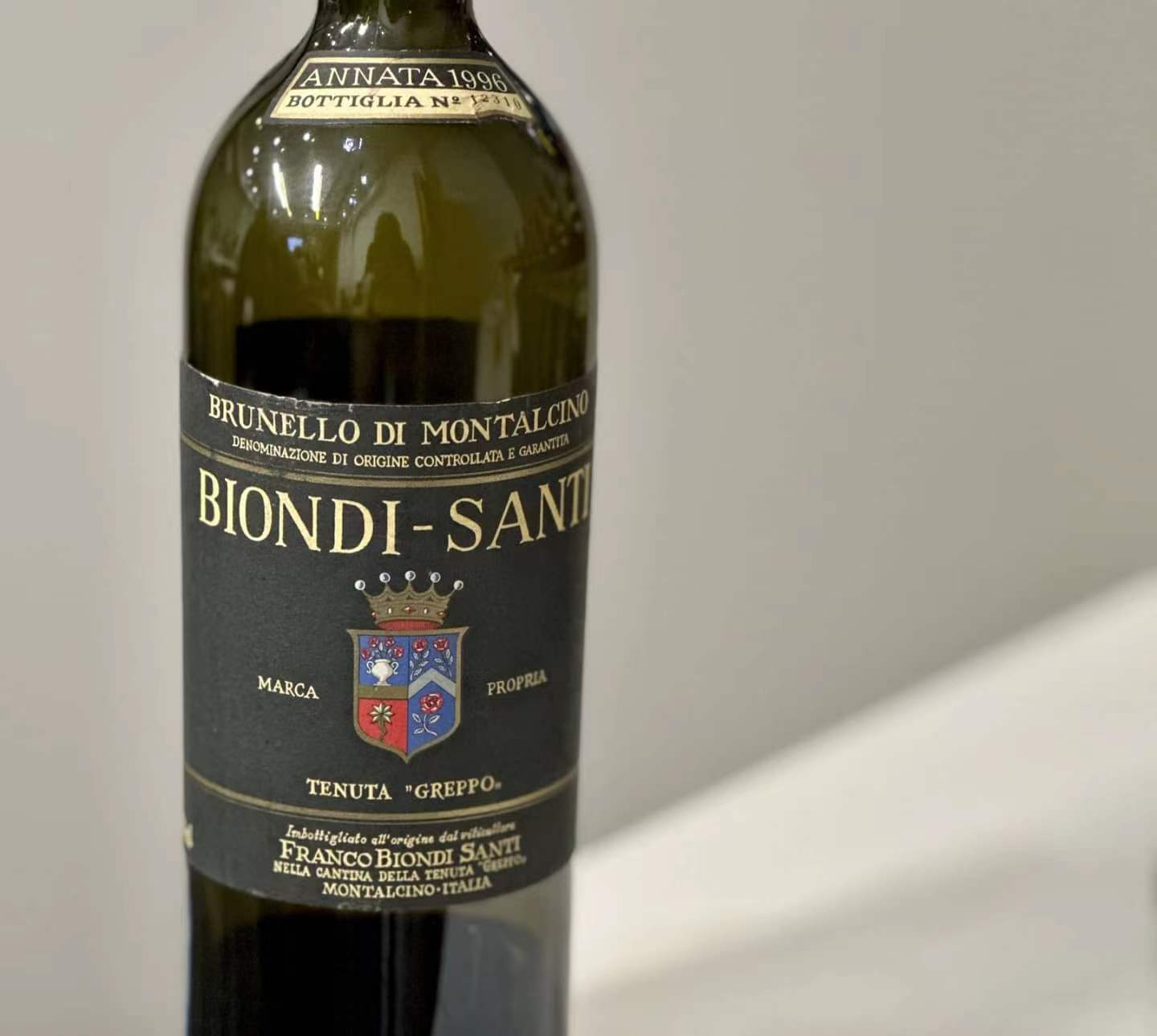
Biondi-Santi 1996 Brunello di Montalcino 87
Full red with a large garnet rim. The very faint aromas of red berries, herbs and sweet spices are completely overwhelmed by notes of mushroom, wet moss, licorice and tar. Then more tobacco and herbs in the mouth, with very little in the way of fruit save for hints of orange peel and dusty red cherry. For my taste, this comes across as excessively savoury, and finishes with even more savoury notes. I’m not sure if my bottle had been poorly stored, but based on this showing I’d recommend you drink up any bottles of the 1996 Biondi-Santi Brunello Annata you own. Drinking window: 2023.
Biondi-Santi 1982 Brunello di Montalcino 94
Bright medium red with a slim orange rim and a translucent garnet hue. Musky red cherry, red plum and crystallized redcurrant aromas are lifted by exotic floral, sandalwood and tobacco elements. Nicely broad, layered and sweet in the mouth, with densely focused flavours of candied red cherry, smoke, tar, balsamic herbs and milk chocolate. Very plush and silky in texture on the impressively deep, powerful and long close. The 1982 Brunello has always been more monolithic and broad than other vintages like 1981 and 1983, but the 1982 was also one of the better wines made by Franco Biondi-Santi in the 1980s and it has shown admirable staying power. Drinking window: 2023-2030.
Biondi-Santi 2016 Brunello di Montalcino Riserva 98+
Bright garnet-tinged red. Pomegranate, sour red cherry, smoke, blood orange, violet, iris and peony on the captivating nose. Then polished and deep, with a multilayered quality to the flavours of red fruit, herbs and minerals. Closes long and pure. Very well balanced, such that the 14% alcohol seems less than the 13.5% of the 2017 Brunello. This wine was vinified in vertical Slavonian oak barrels with indigenous yeasts selected from Biondi-Santi’s own vineyards and aged in large Slavonian oak barrels for three years. Hauntingly refined and long, this is one of the best Brunello Riserva wines from Biondi-Santi in some time, a really beautiful, drop-dead gorgeous Sangiovese wine. It’s also very much a Biondi-Santi wine, boasting chiseled acidity and utmost precision; it differs noticeably from the also memorable 2015 Riserva which was made by the previous technical team and that was riper than was common for Biondi-Santi and its history. No matter, both wines will have legions of fans. Drinking window: 2028-2070.
Biondi-Santi 2015 Brunello di Montalcino Riserva 98
Good full bright red. Captivating aromas of pomegranate, blood orange and dark red cherry are complicated by notes of sweet spices and herbs (thyme, rosemary), all of which are typically found in Brunellos of warmer years like 2015. A floral top-note adds freshness and lift. In the mouth the wine is simply sumptuous, with multilayered and creamy flavours of red and dark cherry boasting outstanding inner-mouth perfume and a refined, suave quality. The finish is long and very pure. Biondi-Santi’s 2015 Brunello Riserva manages the neat and rather infrequent trick of being at once light on its feet and yet extremely powerful and creamy. It’s beautifully delineated if quite ripe in style for a Biondi-Santi Brunello, making it slightly less classic for Biondi-Santi than say the 2016 Riserva, but still neatly combines the ripeness and power of the year with the winery’s trademark highly vibrant style. Drinking window: 2030-2060.
Biondi-Santi 2012 Brunello di Montalcino Riserva 95
Moderately saturated red-ruby. Aromas of candied redcurrant, spicecake, mocha and licorice are complicated by hints of white pepper and herbs. Enters supple and dense (and very 2012-like), with excellent sweetness of fruit to its red cherry, plum and mocha flavours that are strongly framed and somewhat dominated by the wine’s very noteworthy tannic spine. Closes with with good energy and length. Not the fruitiest Brunello Riserva ever made, but this wine is a major success in a relatively hot year that many other Brunello estates had real problems with. It is one of the vintage’s freshest, most piercing Brunello wines, while still boasting fairly creamy, rich, ripe fruit in keeping with the warmer than usual seasonal temperatures. Drinking window: 2026-2050.
Biondi-Santi 2011 Brunello di Montalcino Riserva 94
Much better than the 2011 Annata, the Biondi-Santi 2011 Brunello Riserva has always been better than any wine made in such a difficult year had any right to be. Dark red. Musky nuances give way to ripe red fruit, tar, licorice and woodsy aromas. Rich and dense, with flavours of red cherry and cedar lifted by hints of orange peel, quinine and bergamot. The aftertaste features rising hints of violet and tobacco, and a very strong mouthcoating tannic presence. Make note that I have always found the 2001 Biondi-Santi Brunello Riserva to improve markedly with aeration so decant in the morning of the evening you are going to drink it in. Even better, you could pull a page out of the Franco Biondi-Santi page of wine tasting and open it the night before, double decant it, and then carafe it the following morning, good to go later that evening. Drinking window: 2028-2048.
Biondi-Santi 2010 Brunello di Montalcino Riserva 97
Vivid red with a slight garnet rim. Brooding aromas of strawberry and raspberry are complicated by hints of minerals, cherry cola and dried violet, along with slow-building tobacco herbaceousness. Still tangy red fruit flavours are complicated by cherry preserve and a certain steeliness, with silky if noteworthy tannins providing ample backbone. Brightly energetic and focused Brunello Riserva that boasts outstanding finishing thrust and spiciness. Drinking window: 2027-2060.
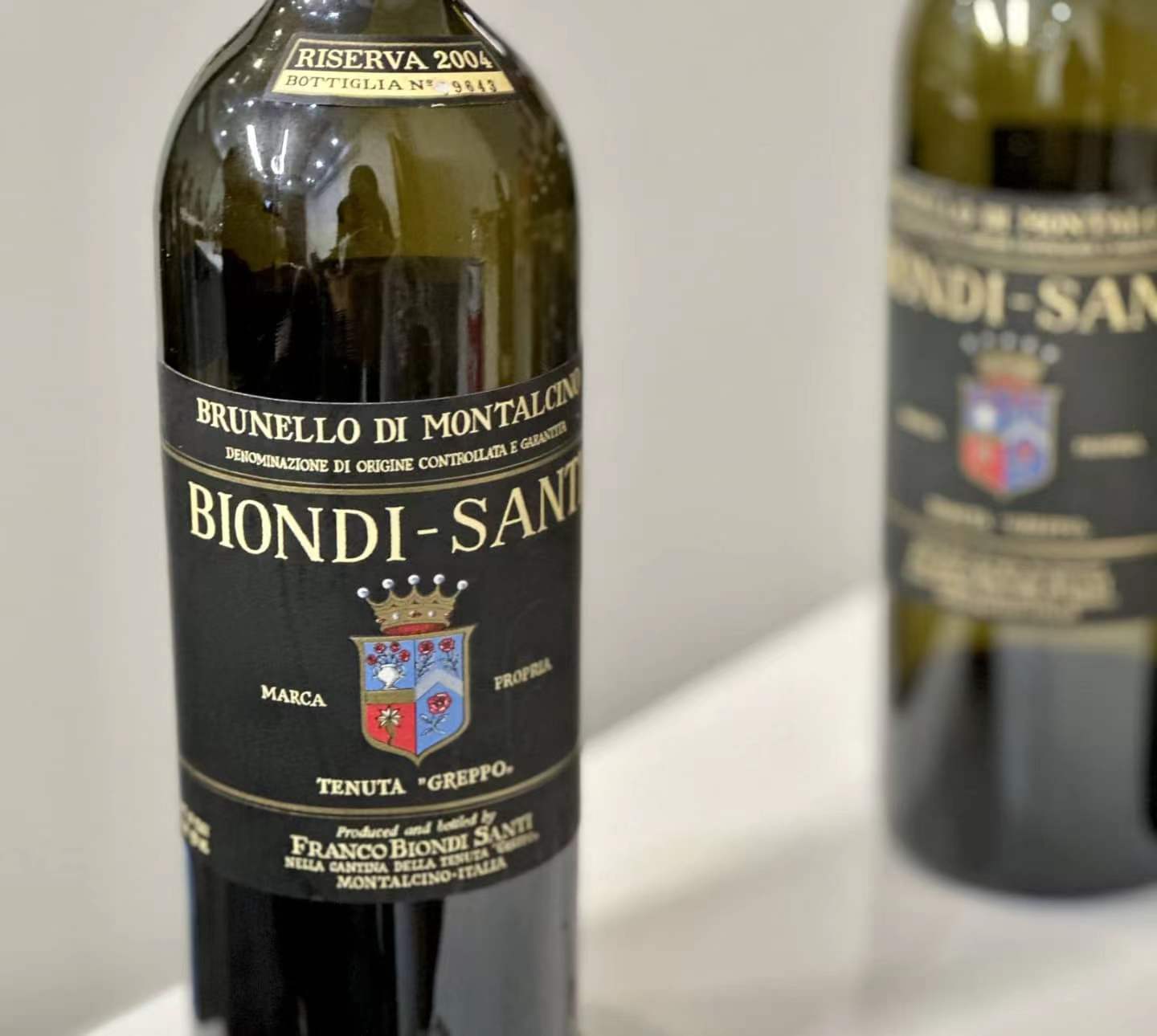
Biondi-Santi 2004 Brunello di Montalcino Riserva 96
Moderately saturate red with very little rim. Profound Brunello with deep, powerful aromas of rich red fruit, herbs and licorice, lifted by notes of cardamom and noble woods. Still today, at this ripe old age, Biondi-Santi’s 20024 Brunello Riserva unfolds only slowly with aeration, picking up exotic notes of blood orange and dried cardamom complicating the mushroom, mint, grilled porcini, nutmeg and dark red cherry flavours showing impressive depth and striking purity. Becomes more open, brisk and broad as it sits in the glass, picking up volume and an increasing mineral slant. This specific bottle, though outstanding, was less magical than one I had last December (this bottle remained a little too sturdy and unyielding despite plenty of air), and so my score is an average of the two performances (98 last December; 94 this time around. Drinking window: 2028-2065.
Biondi-Santi 1999 Brunello di Montalcino Riserva 97
Saturated violet. Drop-dead gorgeous aromas of candied red cherry, kirsch, blueberry reduction, tobacco, graphite and lavender are expansive and strikingly precise. It’s amazing just how fresh this is at twenty-four years of age. Dark cherry flavours verge on the syrupy, but maintain freshness thanks to bright minerality and harmonious acid penetrance. Finishes extremely long and silkily textured, with sweet boysenberry and blueberry notes. An absolutely drop-dead gorgeous old wine. Drinking window:2024-2045.
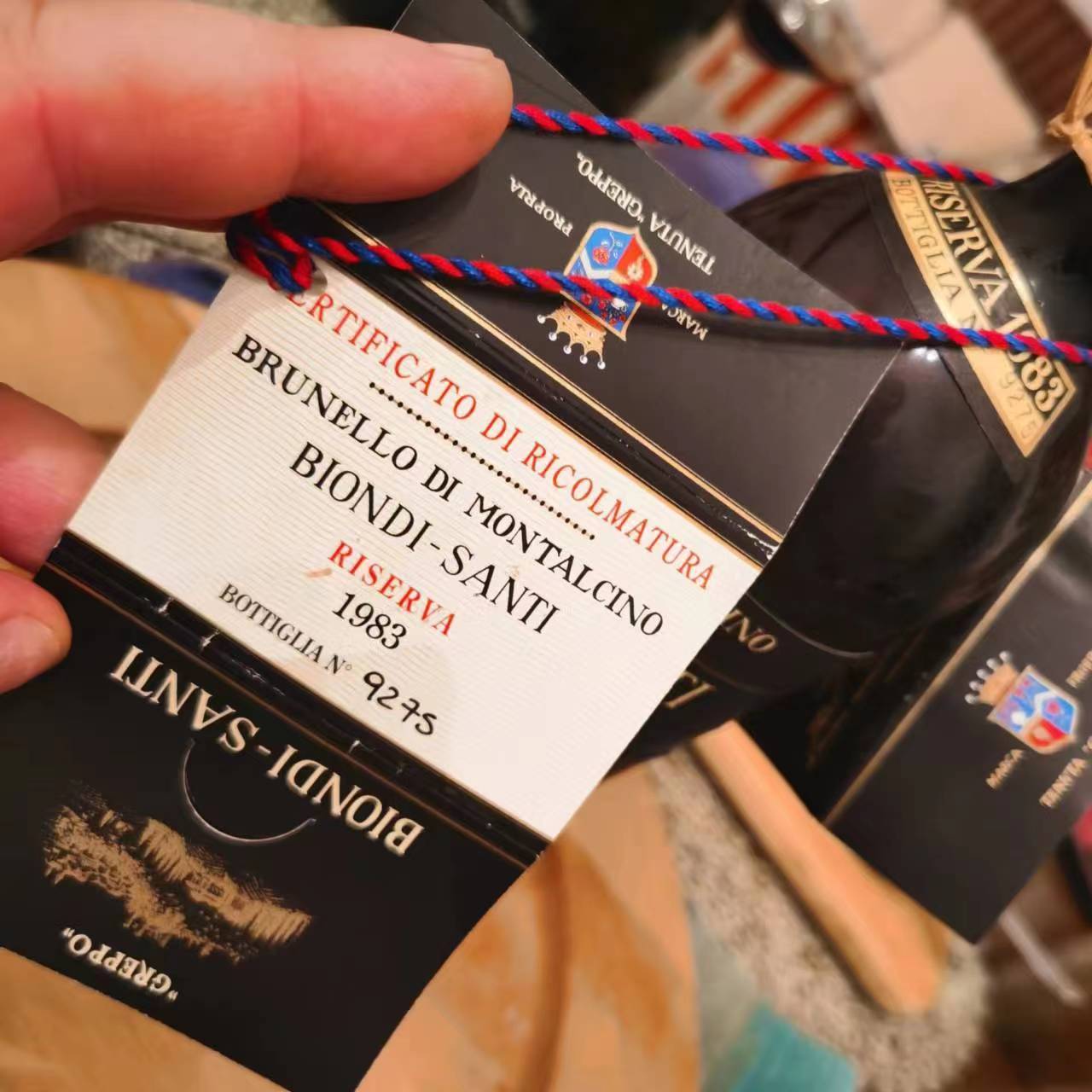
Biondi-Santi 1983 Brunello di Montalcino Riserva 98
Deep red with barely a thin garnet rim: you can tell this bottle (recorked in 2000) was well-cellared. The nose is truly deep and multilayered with aromas of ripe but fresh red cherry, sweet spices, aromatic herbs and sandalwood; in some ways, it’s not like that of some old Soldera bottlings I know well, but more elegant and less ripe than those wines. Big and full-bodied but also round and mellow on entry, then more austere and steelier in the middle, but with the creaminess of the noble tannins that never leaves the scene providing support to the floral, licorice, and balsamic red and dark berry and plum flavours. Remarkably juicy and fruity at 40 years of age, this marvelously intense, concentrated and well-balanced wine is drinking beautifully and is a super-successful Riserva. It exemplifies extremely well why Biondi-Santi Riserva Brunellos fetch the high prices they do: with a wine as good and memorable this one, you won’t regret a single penny. Drinking window: 2023-2042.
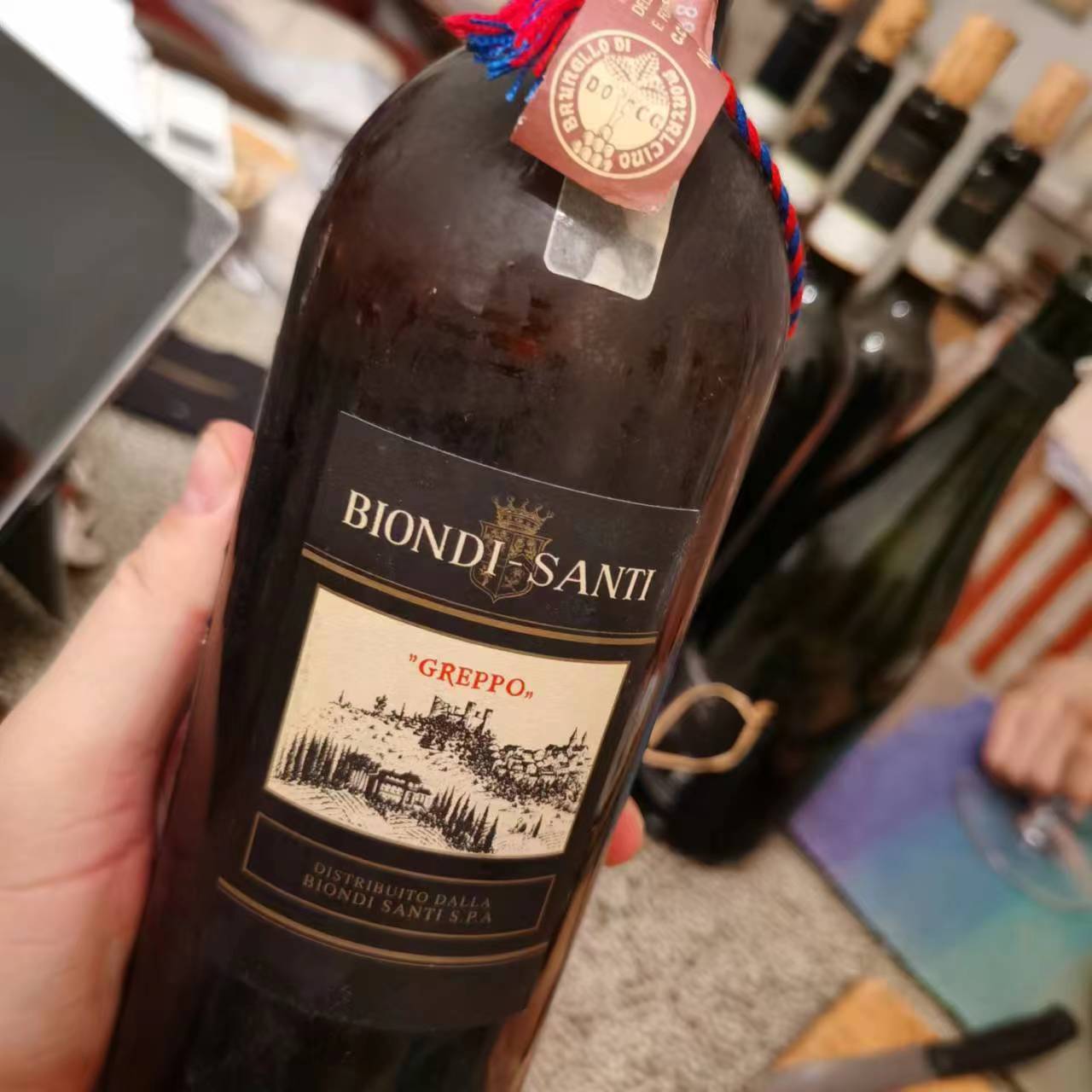
Biondi-Santi 1981 Brunello di Montalcino Riserva 96
Pale ruby-red with a garnet cast throughout. Sexy, extremely perfumed vibrant nose of oak-spiced raspberry and strawberry syrup accented by exotic herbs, porcini, flint, and cedar with a sneakily intense note of red rose emerging with air. Piercing red berry and orange peel flavours are still juicy and impressively bright after all these years, with tangy minerality adding energy and focus. More about flowers than fruit, this is a knockout wine that is aging brilliantly, showing impressive finishing thrust and a steely, high-acid personality. But it’s not a Riserva I would hang on to for much longer. Drinking window: 2023-2032.
Biondi-Santi 1975 Brunello di Montalcino Riserva 100
Medium red with a hint of garnet at the edge: beautiful fresh colour for a wine that’s this old. Captivating, deep, pure aromas of wild red cherries and berries, smoke, exotic herbs, earth, iron and sandalwood, complicated by a hint of apricot. Considering this is almost fifty years old, this is fantastically deep and silky in the mouth, but with crushed-stone minerality and an aromatic lending force to the strawberry, licorice, tar, sandalwood and earth flavours. Incredibly deep, compellingly balanced and edge-free wine with an explosive, practically endless finish that boasts noteworthy sweetness and is literally unforgettable. An absolutely monumental wine that should you be lucky enough to taste, I guarantee you will not forget either. Amazingly, I think this can still age (maybe not improve) and certainly last another twenty-thirty years effortlessly. Drinking window: 2023-2050.
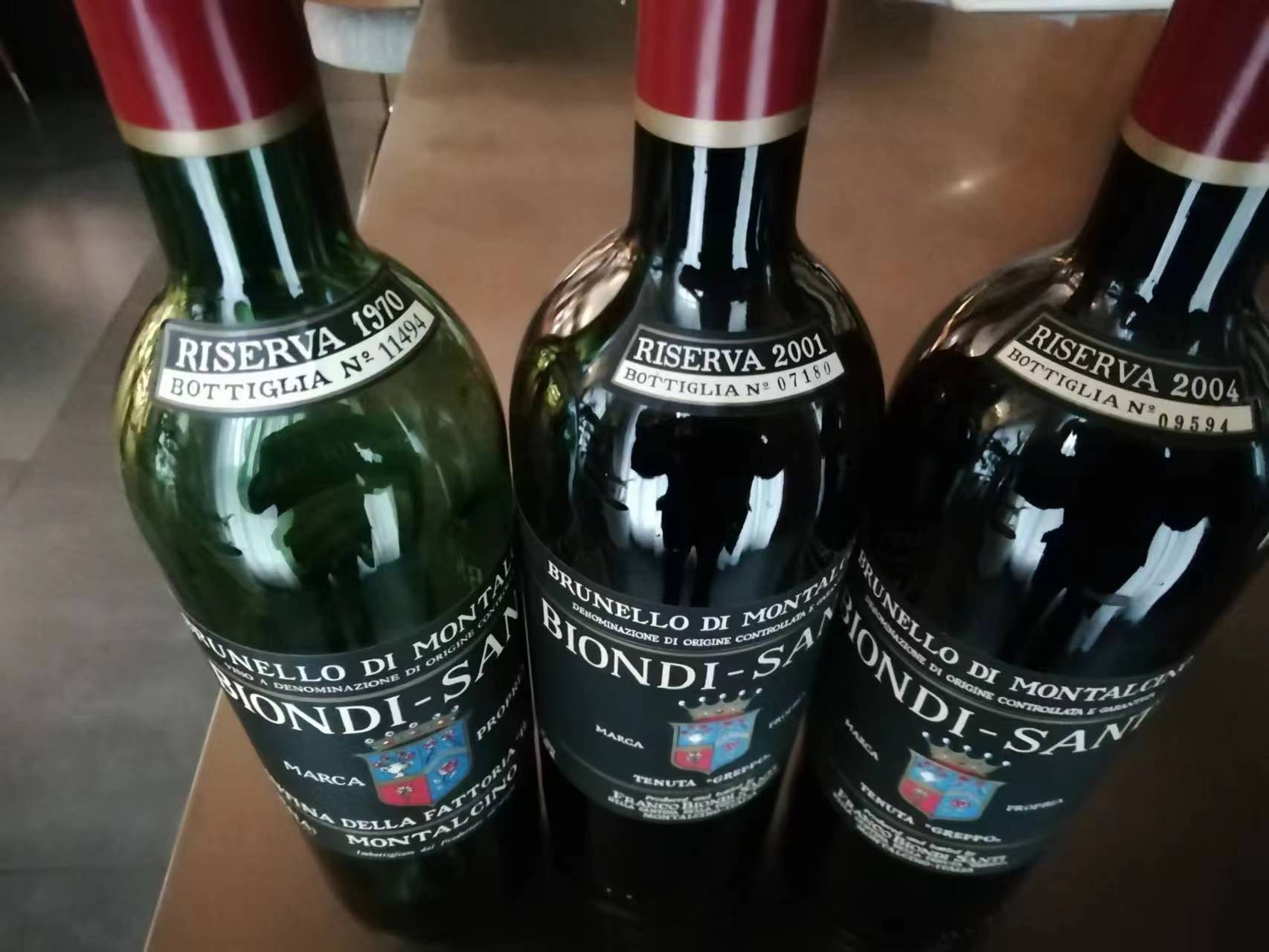
Biondi-Santi 1970 Brunello di Montalcino Riserva 97
Garnet-red with orangy tinges. Very forward, broad and open-knit aromas and flavours of red cherry, faded rose petals, orange peel, graphite, anise, forest floor and smoke. Multilayered and fresh, but with a nicely mouthcoating texture and lively acidity that leaves a penetrating quality behind. The long finish features noble tannins and building mineral, red berry and cherry nuances. Another absolutely spectacular Brunello Riserva from Biondi-Santi. Drinking window: 2023-2040.

Ian,
Wonderful review of the history of Brunello and the Biondi-Sandi contributions, and I especially appreciate the insight on the vintages, which is quite encyclopedic. For my Brunello-purchasing dollars, 2001, 2004, 2010, and 2016 have stood out over the last 20 years. I’m curious about 2 things. First, what’s your initial take on 2019 as compared to these other strong vintages? Second, did I read correctly that you have a book on Montalcino in your literary pipeline? That will be most highly anticipated.
Grazie,
John
Ciao John,
sorryy for the tardiness of the reply, I apologize, but it’s been a zoo lately.
I think the 2019 is a very good vintage, but as I write in my intro to the 2019 preview piece a few days ago, I don’t think it will prove as memorable as the 2015 and 2016, and most wines won’t be better than the 2013s either. There are some truly gorgeous wines in the 2019 bunch, but based on what I’ve tasted so far, I think many wines are just too open-knit and broad to rank amongst the most elegant Brunellos of memory. However, I will be tasting another 2019 >Brunello 100 wines or so this January and will write those up too, and nothing would make me happier to then be able to write that I have changed my mind.
Yes, huuuuuge Brunello book in the same mould of Barolo Terroir coing out in late 2025, so u know what u r in for! But first a handbook on The Wine Terroirs of Italy that will be a hopefully useful study guide in the same manner of “The Grapes and Wines of Italy: The Definitive Compendium Region by Region book already out and then Barbaresco Terroir late 2024.
Thanks for your interest,
Ian
Ianclassic refiend Brunellos. But it might also be a case of different strokes for different folks.
Ciao there excuse me for the tardiness of my reply, but we had a technical gfitch because I had in fact answered your kind query already a few days ago. Go figure.
I think 2019 is a strong vintage but less so than I ahd originally anticipated, now that I have tasted some of the wines. For my money, it will never come close to 2015 and 2016 and I think even 2013 will be superior in the long run. But the caveat is that I have tasted thus far just some of the wines, so I will have a much better opinion after I taste another 100 or so next January. Will report then! 🙂
As for the bookmyes, it will be just like barolo Terroir in format, so you know what to look forward to! But it’s still a couple of years away before being published, first I have to finish my brand new study handbook on Italy’s wine terroirs and denominations, a handbook/study guide in the mould of “The Grapes and Wines of Italy: The Definitive Compendium Region by Region” that complements it nicely (it’ll be out early in 2024) and then “Barbaresco Terroir”, that will compelment the book on Barolo very well while introducing a slew of new info on Nebbiolo and the likes. That big tome will be out by the end of 2024. No rest for the wicked, as they say….;)Thanks for your questions,
Ian
Thanks for the update on the pending publications. I look forward to these with great anticipation. I’m of the belief that to truly appreciate the wines, you have to understand the “why” about how they got that way.
John, I really couldn’t agree more. The more you know about something, be it wine, food, architecture, paintings etc…, the more enjoyment you can draw from any activity. Clearly you don’t have to be a Literature Noble laureate to enjoy a good book, nor do you need to win the Pritzker Awards in Architecture in order to appreciate the beauty of a Gehry building, but it doesn’t exactly hurt to know more about what it is you are eating, drinking, seeing and so forth.
So yes, I TOTALLY agree with you. With the also very important consequence that by reading, one also learns and improves him or hersef. No small thing, I think you’ll agree. ian